

Kell Environmental — Your Trusted Partner in Environmental Safety
Forty thousand Americans die from asbestos-related diseases every year. That number has not declined. Despite decades of regulatory efforts, despite widespread awareness of the dangers, despite a federal ban on chrysotile asbestos that took effect in 2024, the death toll continues unabated. The reason is devastatingly simple: asbestos already embedded in buildings keeps killing people who disturb it without proper precautions—and millions of structures across the country still contain this deadly material. For homeowners and business owners seeking professional environmental remediation services, we offer certified inspection, abatement, and safety solutions.
Pennsylvania ranks among the top five states nationally for asbestos-related deaths. The Environmental Working Group documented over 17,700 deaths from asbestos-related diseases in the Commonwealth between 1999 and 2017. That figure includes 3,257 mesothelioma deaths and 1,505 asbestosis deaths. Steel manufacturing, shipbuilding, power generation, and locomotive factories left a legacy of contamination that continues claiming lives decades after the initial exposure occurred. For property owners in South Central Pennsylvania, this history creates present-day obligations that cannot be ignored.
The regulatory landscape for asbestos abatement remains complex and carries serious legal consequences for those who fail to comply. Federal rules under the Clean Air Act require thorough inspections before any demolition or renovation that might disturb asbestos-containing materials. Property owners who skip these steps face strict liability—meaning both building owners and contractors can be held responsible for violations regardless of whether they knew asbestos was present. The stakes are high, the regulations are unforgiving, and the health consequences of improper handling can prove fatal.
A Crisis Decades in the Making
Mesothelioma has a latency period of 20 to 50 years. The workers dying today were exposed in the 1970s, 1980s, and 1990s—often in jobs where asbestos hazards were known to industry insiders but concealed from the workers themselves. Shipyard workers, insulators, pipefitters, electricians, boilermakers, and construction tradespeople bore the heaviest burden. Many brought microscopic fibers home on their clothing, hair, and skin, exposing family members who never set foot on a job site. Wives who laundered work clothes developed mesothelioma. Children who hugged their fathers after work developed mesothelioma. The disease showed no mercy to those whose only crime was proximity to someone who worked with asbestos.
According to the Centers for Disease Control and Prevention, mesothelioma remains a serious public health concern despite declining asbestos use. The CDC reports that 2,669 new cases of mesothelioma were diagnosed in the United States in 2022 alone. Pennsylvania reported 709 mesothelioma deaths and 828 new diagnoses between 2016 and 2020. These numbers reflect exposures that occurred decades ago, and the pipeline of cases shows no sign of emptying. Every year brings new diagnoses traced back to exposures that happened when asbestos was considered safe or when precautions were considered unnecessary.
The federal ban on chrysotile asbestos—finalized in March 2024 and upheld after a significant legal challenge in mid-2025—addresses future imports and manufacturing. Industries that still used chrysotile asbestos, primarily in chlor-alkali production and certain gasket manufacturing, now face phase-out timelines. But the ban does nothing about the millions of tons of asbestos already installed in American buildings. That material remains exactly where contractors put it 40, 50, or 60 years ago, waiting to be disturbed by the next renovation project, the next roof replacement, the next HVAC cleaning or upgrade.

Pennsylvania's Industrial Legacy Lives On
The Commonwealth's industrial heritage created widespread asbestos contamination that extends far beyond factory floors and into every type of building imaginable. Steel mills in the Pittsburgh and Bethlehem regions relied heavily on asbestos insulation to protect workers and equipment from extreme heat. Shipyards along the Delaware River used asbestos extensively in vessel construction—in engine rooms, pipe systems, boiler rooms, and throughout the superstructure. Power plants, oil refineries, chemical facilities, and manufacturing operations throughout South Central Pennsylvania installed asbestos-containing materials that remain in place today.
The Occupational Safety and Health Administration states unequivocally that there is no safe level of asbestos exposure. OSHA's regulations make clear that exposures as brief as a few days have caused mesothelioma in documented cases. Every occupational asbestos exposure contributes to the risk of developing an asbestos-related disease. This understanding shapes both the regulatory requirements that property owners must follow and the professional standards that certified asbestos abatement contractors uphold.
For property owners in York, Lancaster, Dauphin, Berks, Cumberland, Adams, Lebanon, and Chester counties, the practical implications are straightforward. Any building constructed before 1980 likely contains asbestos in some form—pipe insulation, floor tiles, ceiling textures, roofing materials, siding, joint compounds, or fireproofing spray. Commercial and industrial buildings face particular scrutiny under federal regulations, but residential properties carry their own risks. A homeowner who tears out old floor tiles without testing has just created an exposure hazard for everyone in the household.
The specific concerns facing older buildings in our region—including where asbestos commonly hides and what warning signs property owners should recognize—are examined in detail in [Pennsylvania's Hidden Asbestos Crisis: Why Older Buildings in South Central PA Remain Dangerous], which provides essential context for understanding why professional asbestos inspection matters before any renovation work begins.
Federal Requirements That Carry Real Consequences
The National Emission Standards for Hazardous Air Pollutants govern asbestos during demolition and renovation projects. These regulations, enforced under the Clean Air Act, apply to most commercial, industrial, and institutional buildings. Residential buildings with five or more dwelling units fall under these requirements as well. The regulations require a thorough inspection by a certified AHERA building inspector before work begins. The inspection identifies whether asbestos-containing materials are present, determines their condition, and establishes what must be removed before construction can safely proceed.
Notification requirements apply to all demolition projects and to renovations involving threshold amounts of regulated asbestos-containing material. Property owners must notify the appropriate state agency—in Pennsylvania, the Department of Environmental Protection—at least 10 working days before demolition or renovation activities begin. The notification must include project details, estimated quantities of asbestos-containing materials, removal methods to be employed, contractor information, and the disposal site where waste will be taken.
These requirements carry strict liability, meaning violations result in penalties regardless of intent or knowledge. A property owner who genuinely did not know asbestos was present still faces the same enforcement consequences as one who knowingly cut corners. Fines can reach tens of thousands of dollars per violation. Criminal penalties apply to knowing violations or to patterns of non-compliance. The EPA and state agencies take these violations seriously, and enforcement actions are a matter of public record.
Removal work must be performed by trained and accredited professionals using proper containment, wetting, and disposal procedures. Workers must wear appropriate respiratory protection. Work areas must be sealed to prevent fiber migration. Materials must be wetted to suppress dust during removal. Waste must be packaged in labeled, leak-tight containers and transported to approved landfill sites equipped to handle hazardous materials. Air monitoring must confirm that fiber levels have returned to acceptable limits before containment is removed and normal activities resume. Professional asbestos abatement services ensure these standards are followed.
The complete requirements for renovation projects—including inspection protocols, notification procedures, contractor certification requirements, and what happens when property owners fail to comply—are outlined in [Before You Renovate: Understanding Asbestos Abatement Requirements in Pennsylvania], which provides practical guidance for homeowners and commercial property owners planning construction work.
The Devastating Cost of Cutting Corners
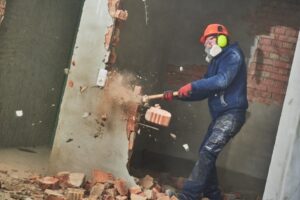
Property owners who skip inspections or attempt DIY removal create catastrophic liability for themselves and genuine danger for everyone around them. Improper disturbance of asbestos-containing materials spreads microscopic fibers throughout buildings, contaminating spaces that were previously safe. These fibers are too small to see with the naked eye. They settle on surfaces, embed in carpeting and upholstery, and circulate through HVAC systems. Once released, they remain available for inhalation indefinitely.
Cleanup following improper removal often costs ten times more than professional asbestos abatement services would have required. Contaminated buildings may require extensive remediation that goes far beyond the original renovation scope. In some cases, structures have been condemned when contamination proved too extensive or too expensive to address. The attempted savings from skipping proper procedures evaporate instantly when the true costs become apparent.
Legal consequences compound the financial damage. Insurance policies typically exclude coverage for asbestos-related claims when proper procedures were not followed. Liability extends not only to the property owner but to contractors, subcontractors, and anyone else involved in the improper work. Personal injury claims from exposed workers or building occupants can result in substantial judgments. Mesothelioma cases regularly result in settlements and verdicts measured in millions of dollars because juries understand that victims are dying from a preventable exposure. Hiring a certified asbestos abatement contractor mitigates this risk.
The health consequences take years or decades to manifest but prove devastating when they arrive. Workers exposed during improper renovation may develop mesothelioma 20, 30, or 40 years later—a cancer with no cure and survival typically measured in months rather than years. Lung cancer risk increases substantially with asbestos exposure, particularly for those who also smoke. Asbestosis, a chronic scarring of the lungs, causes progressive breathing difficulty that worsens over time. These diseases cannot be reversed. The damage done during a single improper renovation project can kill people decades in the future.
Professional Abatement Protects Everyone
Certified asbestos abatement follows established protocols designed to minimize fiber release and protect workers, building occupants, and the surrounding community. The process begins with proper assessment—identifying what materials are present, testing to confirm asbestos content, and evaluating conditions to determine appropriate response. Not every asbestos-containing material requires removal. Materials in good condition that will not be disturbed by planned activities can often be managed in place through an operations and maintenance program.
When removal is necessary, professional contractors establish containment before any disturbance begins. Plastic sheeting seals off work areas from the rest of the building. Negative air pressure systems draw air inward through HEPA filters, ensuring that any fibers released remain within the containment zone rather than migrating to occupied spaces. Workers enter through decontamination chambers and wear full protective equipment including respirators rated for asbestos work.
Inside containment, materials are thoroughly wetted before removal to suppress dust and fiber release. Workers use hand tools rather than power tools whenever possible to minimize disturbance. Removed materials are immediately packaged in labeled, leak-tight containers. Nothing leaves the containment area without proper decontamination procedures. Licensed haulers transport waste to disposal facilities permitted to accept asbestos-containing materials. Complete documentation tracks the waste from generation through final disposal.
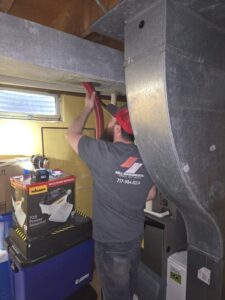
Following removal, the work area undergoes visual inspection and air monitoring to confirm that fiber levels have returned to acceptable limits. Clearance testing provides objective verification that the space is safe for reoccupancy. Only after clearance is confirmed does the containment come down, and normal activities resume. The entire process protects workers, building occupants, and the property owner from liability that could result from improper handling. For buildings with duct systems, HVAC cleaning is coordinated to ensure no asbestos fibers circulate.
Taking Action Before It's Too Late
The 40,000 Americans who die annually from asbestos-related diseases represent a preventable tragedy. Every death traces back to an exposure that occurred years or decades earlier—often in workplaces or homes where proper precautions were not taken, where hazards were not recognized, or where cost savings were prioritized over human safety. Property owners today have both the knowledge and the resources to prevent future casualties. The question is whether they will use them.
Professional asbestos inspection identifies what materials are present, evaluates their condition, and determines appropriate response. The cost of assessment is minimal compared to the cost of improper handling. The peace of mind that comes from knowing your building is safe—or from having addressed hazards properly—is invaluable. Property owners planning any renovation work should arrange a professional inspection before construction begins. Property owners selling buildings should understand their disclosure obligations. Property owners managing older structures should implement operations and maintenance programs that prevent accidental disturbance of asbestos-containing materials.
The deaths will continue. The latency period ensures that exposures occurring today will produce mesothelioma diagnoses in 2045, 2050, and beyond. But property owners who take proper precautions—who arrange professional inspections, who hire certified asbestos abatement contractors, who follow the regulations designed to protect human life—will not contribute to that future death toll. They will have done their part to end a crisis that has already claimed far too many lives.
Partner with Kell Environmental for Asbestos Abatement
Kell Environmental provides asbestos abatement services throughout York, Lancaster, Berks, Dauphin, Cumberland, Adams, Lebanon, and Chester counties. Our trained professionals conduct thorough inspections, implement proper containment, remove contaminated materials safely, and ensure appropriate disposal—protecting both your property and the people who use it. We understand the regulations, we maintain all required certifications, and we take seriously our responsibility to protect workers, building occupants, and the community from asbestos exposure.
Our Services Include:
- Asbestos Abatement — Professional inspection, testing, containment, removal, and disposal services for residential, commercial, and industrial properties
- Interior Demolition — Safe demolition services with proper asbestos protocols to protect workers and prevent contamination
Concerned About Asbestos in Your Property? Contact Kell Environmental today for a professional assessment. When 40,000 Americans die every year from a preventable cause, professional abatement is not optional—it is essential.
Works Cited
"Asbestos - Overview." Occupational Safety and Health Administration, U.S. Department of Labor, www.osha.gov/asbestos. Accessed 22 Dec. 2025.
"Incidence of Malignant Mesothelioma." Centers for Disease Control and Prevention, U.S. Department of Health and Human Services, 10 Sept. 2025, www.cdc.gov/united-states-cancer-statistics/publications/mesothelioma.html. Accessed 22 Dec. 2025.
Related Articles
- [Pennsylvania's Hidden Asbestos Crisis: Why Older Buildings in South Central PA Remain Dangerous]
- [Before You Renovate: Understanding Asbestos Abatement Requirements in Pennsylvania]